
Watershed by Watershed
Drought, Hydrology and Restoring the Water Cycle

This is a follow-up article of last week’s musings about the June heatwave and ‘punitive ecology’, catalysed by Gregory Derville’s article ‘Vous aves aimé la canicule, sous allez adorer la sècheresse’.
There is, as maybe we have all noticed, a conspicuous shortage of large-scale corrections for problems that have large-scale causes. Our damages to watersheds and ecosystems will have to be corrected one farm, one forest, one acre at a time. (Wendell Berry. 2005. The Way of Ignorance and Other Essays. Washington, DC: Shoemaker & Hoard.)
I have carried Wendell Berry’s sentence for almost two decades.
Over time, it has become shorter in my memory, less like a quotation and more like an instruction: restore ecosystem after ecosystem, watershed by watershed. Not because that phrasing is the exact line, but because it names the only scale at which ecological hope has ever felt technically honest to me. Not the abstract planet. Not “nature” as a mood board. Not sustainability as institutional wallpaper. A place. A catchment. A soil body. A stream. A slope. A field edge. A village. A watershed with names, pipes, ditches, roots, permits, failures and neighbours.
On 1 July 2026, our rain tanks were empty.
Not in September, when this would usually be expected. Not at the exhausted end of a long summer. On 1 July.
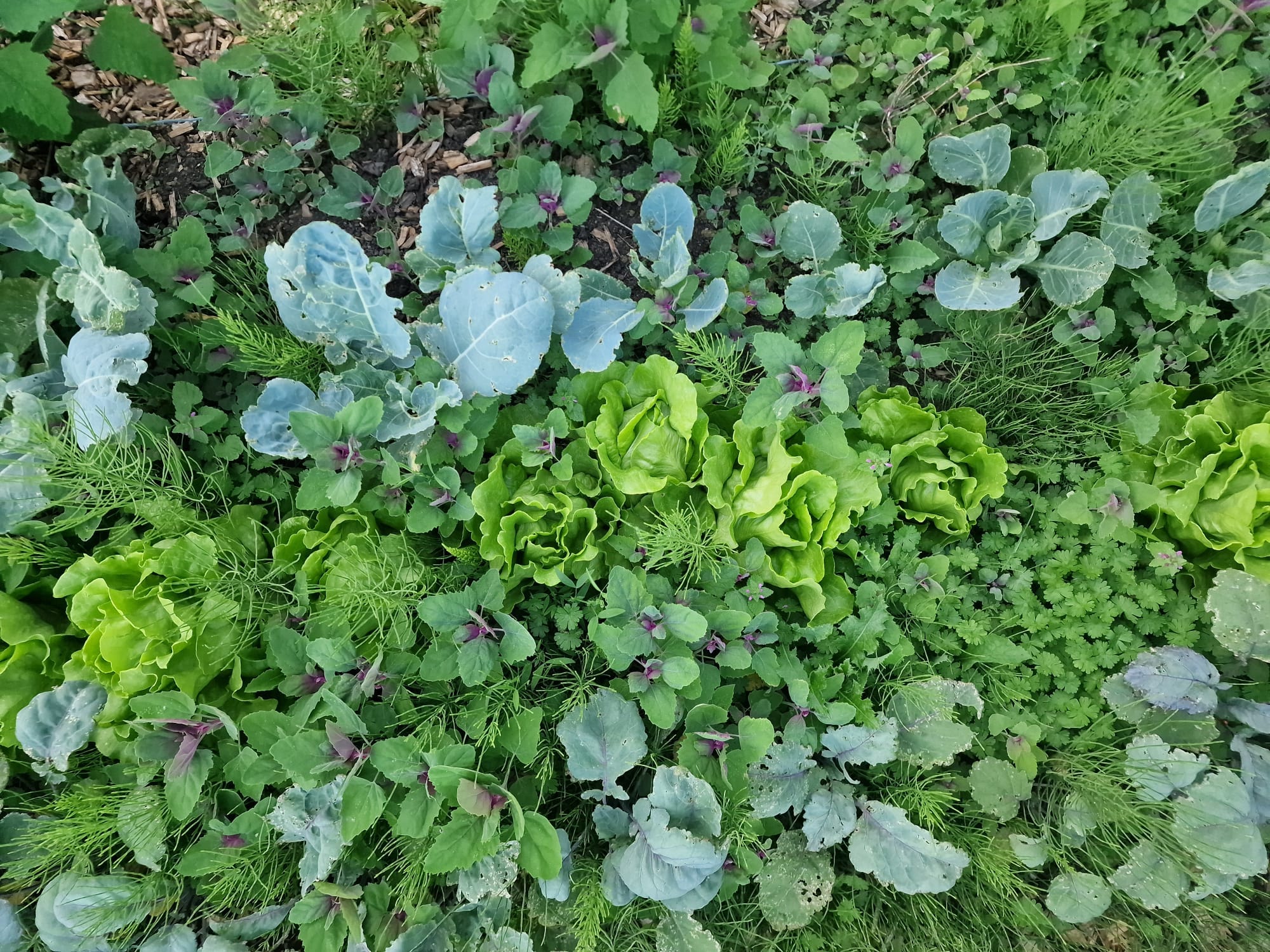
The strange thing is that the farm did not look catastrophic. In photos, it may even look reassuring. Polycultures are good at that. The beds are covered. The soil is shaded. There is organic matter. There are plants growing through plants, flowers among vegetables, perennials beginning to make structure, mulch softening the surface, roots doing their quiet underground work. The first heatwave came, and we weathered it better than bare soil would have. Better than a simplified field would have. Better than a system designed only for extraction would have.
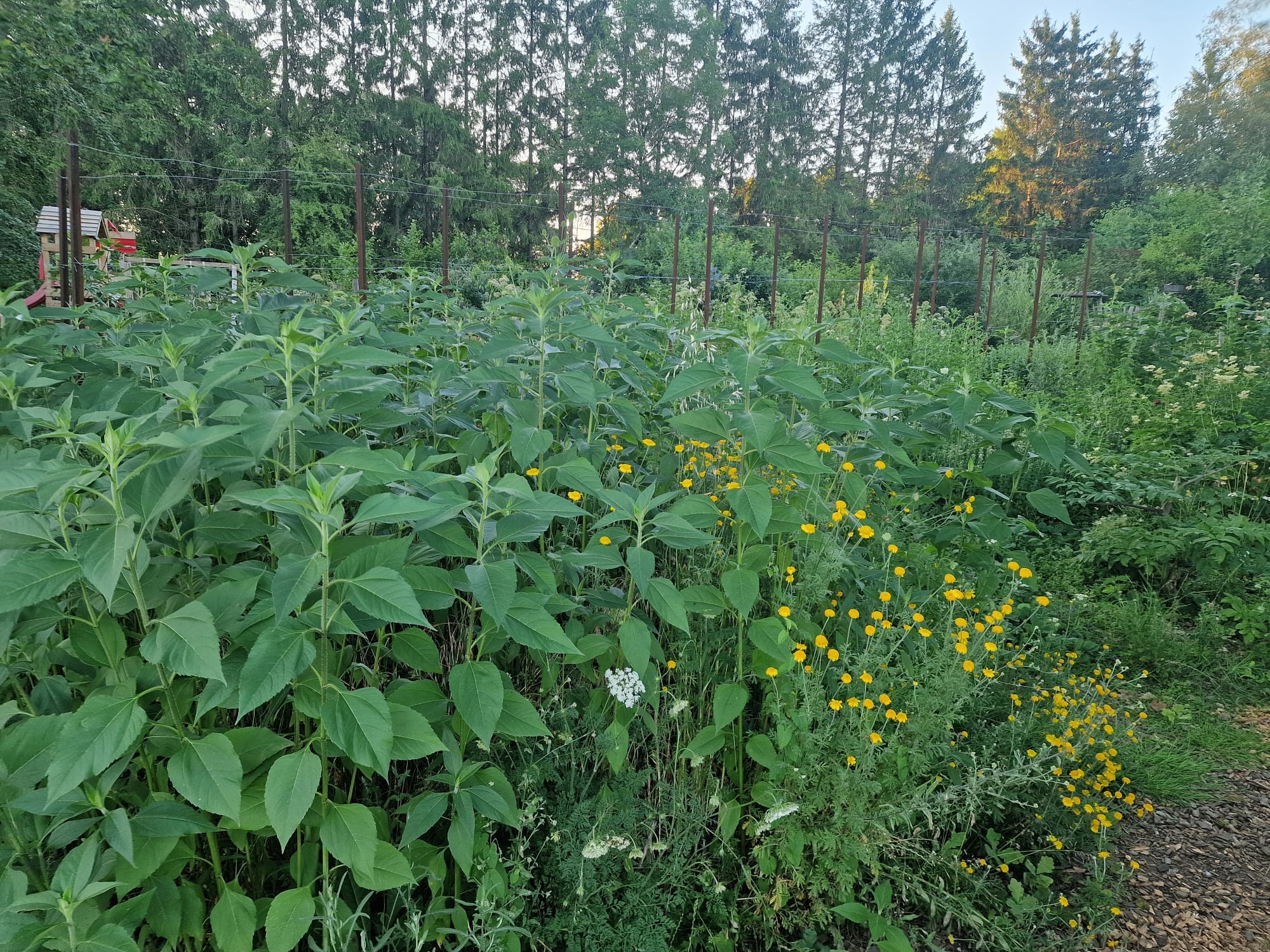
That is the honest beginning of the story: our practices helped.
The living soil helped. The mulch helped. Diversity helped. Root depth helped. Wind moderation helped. The pond helped, though it is only half full after a winter and spring that did not charge it properly. Our attempts to train plants away from shallow, daily dependency helped. The fact that we are designing for soil life rather than immediate yield alone helped.
And still, the tanks are empty.
This is the point at which drought stops being a weather inconvenience and becomes hydrology.
Hydrology is the part of the climate conversation that often arrives late, after the heat maps, after the fire images, after the crop losses, after the anxious advice to drink more water. But climate breakdown is not only warming the air. It is altering the movement, timing, storage and availability of water. It changes the relationship between precipitation, interception by vegetation, infiltration, runoff, soil moisture, evapotranspiration, groundwater recharge, streamflow, pond storage, wetland function and human demand. It changes not only how much water falls, but what the land is still able to do with it.
A drought is not one event. It is a cascade.
The atmosphere becomes thirstier
Warmer air increases evaporative demand. Water is pulled harder from leaves, soil, ponds, rivers and bodies. Plants transpire more until they cannot, then close stomata to protect themselves. Photosynthesis slows. Growth pauses. When soil dries and vegetation stops transpiring, less incoming solar energy is used as latent heat to turn water into vapour, and more becomes sensible heat. The land surface gets hotter. The next heatwave bites harder.
The soil profile empties
Shallow-rooted plants become dependent. Rain tanks reveal what winter and spring did not refill. Ponds fall. Streams run lower, warmer and slower. Groundwater recharge weakens. Public drinking-water systems begin to feel like salvation, but mains water is not outside the watershed. It is the watershed made invisible by infrastructure.
The ethical question arrives: how do we keep life alive without stealing from the future?
For a farm, that question becomes painfully practical. Which plants must live because they anchor the system for the next twenty years? Which annuals can be allowed to fail? How much water is life support, and how much is denial? When is irrigation resilience, and when is it just extraction with better aesthetics? How do we brace for drought without pushing more pressure into aquifers, reservoirs and public systems already being asked to compensate for land use failures upstream?
This is where the water-cycle thinkers matter. Judith D. Schwartz, Erica Gies, Brad Lancaster, Michal Kravčík, Jan Pokorný, Rajendra Singh, Peter Andrews, Walter Jehne and many others are not all saying exactly the same thing. Some work from journalism, some from dryland practice, some from hydrology, some from landscape restoration, some from community water governance. But their shared provocation is simple enough to be dangerous: drought is not only a problem of supply. It is also a problem of reception.
Does the land receive rain, or reject it? Does water infiltrate, or run off? Does the stream reconnect with its floodplain, or is it trapped in a fast, deepened channel? Does the soil hold moisture, or shed it? Does vegetation cool the surface, or has the land been simplified into heat? Do wetlands store, filter and release water, or have they been drained? Do roads, roofs, compacted fields and sealed surfaces hurry rainfall into drains, or does the watershed slow it, spread it, sink it and share it?
This is the scientific heart of watershed restoration: increasing the useful residence time of water in the landscape while protecting water quality and ecological flow.
Useful residence time does not mean hoarding water everywhere. It does not mean making every place wet, building random ponds, blocking every ditch, or calling any puddle regeneration. Real watershed restoration is more specific and more scientific than that. It asks how water moves through a given catchment: through its soils, slopes, geology, vegetation, ditches, drains, streams, floodplains, aquifers, roads, roofs, treatment systems, legal rules and social habits.
It asks where water should slow down, where it should infiltrate, where it should be allowed to flood, where infiltration would risk carrying pollution into groundwater, where vegetation can reduce heat stress, where a stream needs space, where compaction is breaking the soil sponge, where drainage is too fast, where storage is missing, where demand exceeds recharge, and where public policy has confused evacuation with management.
In that sense, our farm is not a private solution. It is a diagnostic instrument.
The polycultures show what helps: covered soil, living roots, organic matter, plant diversity, agroforestry, mulch, reduced wind exposure, shade, distributed water storage, perennial structure and overflow designed as a resource rather than a nuisance. They show that soil is not merely a substrate for production. It is water infrastructure. They show that vegetation is not decoration. It is climate regulation at leaf scale. They show that roots are not only plant parts. They are hydraulic architecture.
But the empty tanks show the limit of farm-scale adaptation.
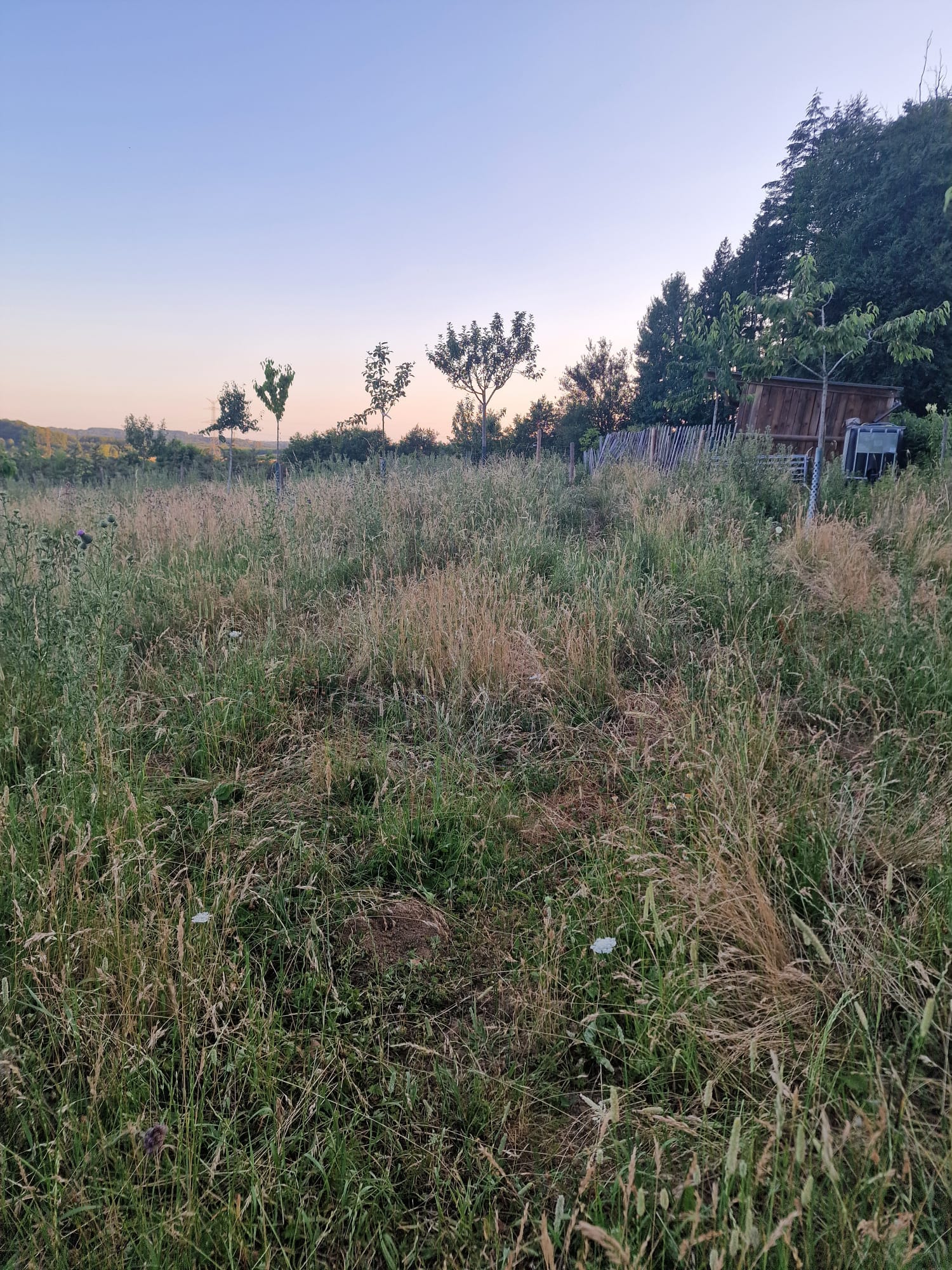
A farm can hold more water than a degraded field. It cannot hold water that never arrived. It cannot recharge an aquifer alone. It cannot re-meander a river by itself. It cannot compensate for every sealed surface, drained wetland, compacted field, bureaucratic delay, overdrawn aquifer and development plan that treats rainwater as waste.
This is why “watershed by watershed” is not a poetic phrase. It is a governance principle.
If drought is produced by the interaction of climate, land cover, soil condition, drainage, storage, infrastructure and withdrawals, then drought resilience has to be built through that same interaction. We restore watersheds by restoring function: infiltration, soil structure, groundwater recharge, ecological baseflow, stream-floodplain connectivity, wetland storage, riparian shade, vegetation complexity, cooler microclimates, distributed storage and social rules that keep use within replenishment.
The aim is not simply to collect more water for ourselves, the aim is to become useful to the water cycle again.
That sentence changes the assignment. It moves the question away from “How do we get enough water to preserve normality?” Normality is part of what emptied the tanks in July. The better question is: what would this place look like if it were designed to receive rain as a gift, not dispose of it as a problem?
On the farm, the answer begins humbly: cover the soil, feed the soil, keep roots alive, reduce evaporation, slow runoff, build storage, use mains water only as life support, prioritise perennials, accept losses where necessary, and stop pretending that every plant has an equal claim during drought.
Beyond the farm, the answer becomes political and infrastructural: restore wetlands, reconnect streams and floodplains, protect recharge zones, reduce sealed surfaces, rebuild hedgerows and riparian shade, support farms that increase infiltration and soil structure, make safe greywater reuse legal and ordinary, fix leaks before drilling deeper, stop trapping ecological water projects in permit delays, and create thousands of small retention points across a watershed rather than relying only on large centralised emergency infrastructure.
Above all, stop managing water as if it were separate from land.
Because drought is not just what happens when rain does not fall.
Drought is what happens when a watershed can no longer remember how to hold rain when it does.
Drought as a problem of reception rather than supply shifts everything about where the responsibility lands. Not just how much rain falls but what the land can still do with it when it does. That matters for us at Purring Oaks directly. Sixty acres in Michigan and we are constantly learning what our soil holds, where water moves too fast, where roots haven’t gone deep enough yet to keep moisture from running off.
The part about becoming useful to the water cycle again rather than just managing our extraction from it… that reorients the project. Not how do we get enough but what kind of land are we being?!
Really glad this writing exists.
Completely agree. Would suggest planting trees and inviting the beavers and those little engineers will do the rest.